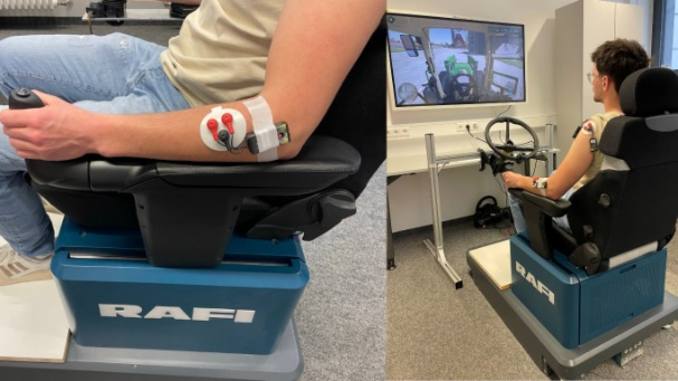
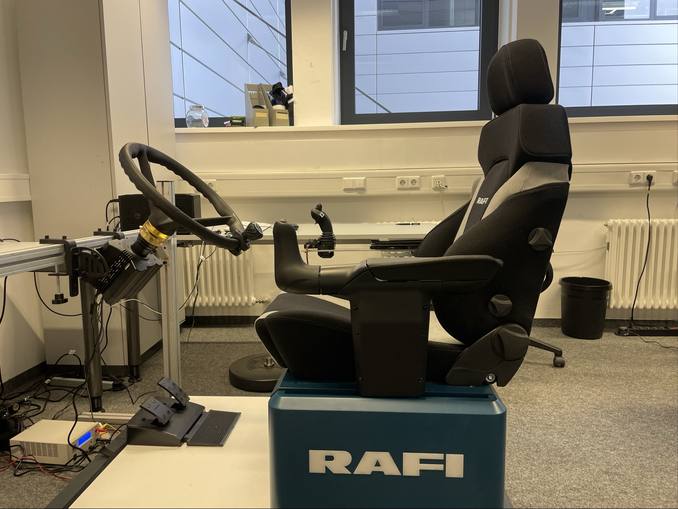
RAFI has extensive experience in the development and design of custom control levers. On the basis of its own technology platform, the company manufactures a wide range of variants, from Tiny to Rough, with a variety of guide mechanisms, control functions, and durability features. While joysticks were previously developed primarily as right-hand controls for operating attachments, RAFI is now focusing on steering joysticks for direct vehicle control.
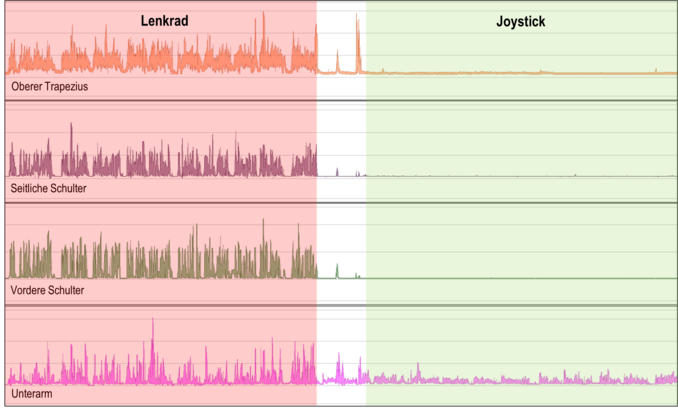
This trend is scientifically supported by research initiated by RAFI at Furtwangen University. The study compared the strain levels of steering wheel and joystick steering using objective measurements of muscle activity via electromyography, as well as subjective evaluations by 21 participants from the agricultural sector.
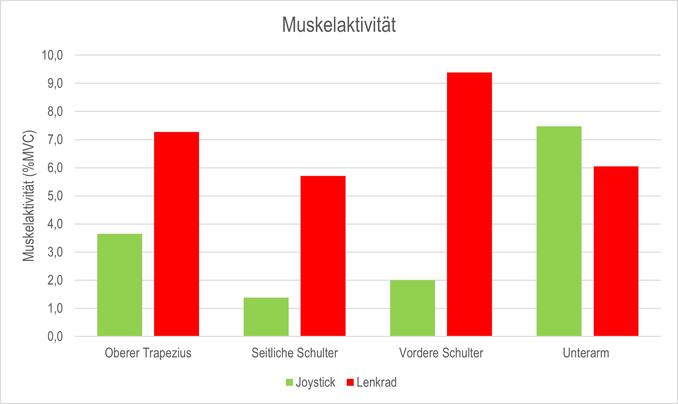
The results are clear: a steering joystick positioned to the left of the driver’s seat allows mobile machinery to be operated with significantly less effort and fatigue than a steering wheel. Short, precise hand movements with the forearm resting comfortably on the armrest eliminate strenuous steering actions and frequent wheel turning, which place considerable strain on the shoulders and neck. Only the forearm muscles exhibit slightly higher activity with the joystick.
The subjective assessments of the 21 participants, aged 19 to 56, confirm the objective findings: in the categories “physical demands” and “effort,” the steering wheel was rated as significantly more strenuous. Moreover, despite its novelty, the joystick achieved higher satisfaction ratings than the long-established steering wheel, indicating strong usability and intuitive operation. The combination of significantly reduced physical workload and high user satisfaction makes joystick steering a promising alternative for the future of agricultural technology.